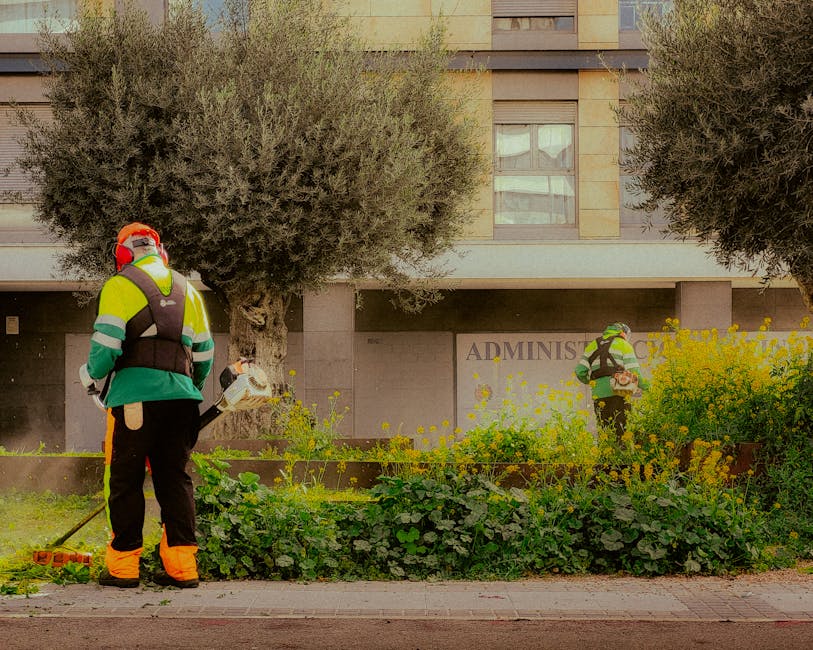
Same day emergency gardeners Blackfriars urgent callouts

If your garden has gone from "needs a tidy" to "needs help now", you are not alone. Storm-blown branches, a fallen hedge, a blocked path, or an overgrown front garden can quickly become a safety issue, a neighbour complaint, or just a lot to deal with on a stressful day. That is where same day emergency gardeners Blackfriars urgent callouts come in: fast, practical help when the job cannot wait until next week.
This guide explains what urgent garden callouts actually involve, how they work in practice, what to expect, and how to decide whether you need emergency help or a more routine visit. It also covers sensible next steps, common mistakes, and a few things people often forget in the rush. Let's face it, when a garden problem lands suddenly, clear thinking helps more than a dozen frantic phone calls.
Why Same day emergency gardeners Blackfriars urgent callouts Matters
Urgent garden problems are rarely just cosmetic. A broken branch can block access, loose debris can make a path slippery, and fast-growing vegetation can hide hazards you really do not want to discover the hard way. In a busy part of London like Blackfriars, where homes, offices, walkways, entrances, and shared spaces often sit close together, even a small outdoor issue can create a disproportionate amount of disruption.
Same-day support matters because timing changes the outcome. A garden that is dealt with promptly is usually cheaper, simpler, and less risky to sort out than one left to worsen for several days. A pile of wet clippings might seem harmless at 9am; by late afternoon, after a bit of rain and foot traffic, it becomes messy, heavy, and awkward to move. Truth be told, people often only notice this after the job has become twice as annoying.
There is also the human side. If you have visitors due, a property handover happening, or a tenant issue that needs attention, you do not want to be explaining why the back gate is blocked by ivy or why the front step is half-covered in mud and cut branches. Emergency gardeners are there to restore order quickly, not to make the garden perfect on day one. That distinction matters.
If you want to understand the broader services that often sit behind an urgent visit, the site's services overview is a useful place to see how garden work can be grouped from maintenance through to clearance and landscaping support.
How Same day emergency gardeners Blackfriars urgent callouts Works
The process is usually straightforward, but there are a few steps that make everything smoother. First, you explain what has happened and how urgent it is. The more specific you can be, the better the response. "A branch is hanging over the driveway" is more helpful than "there's a problem outside." It sounds obvious, yet in the middle of a stressful moment, clarity tends to go missing first.
Next, the garden team will usually assess whether it is a genuine same-day callout, whether it needs specialist equipment, and what access is available. Not every issue is identical. A simple overgrown border can often be tackled quickly, while a fallen tree limb, a large garden clearance, or a steep, wet access route may require more preparation.
When the team arrives, the immediate focus is often on making the area safe and workable. That can include removing loose debris, cutting back obstructive growth, clearing paths, or arranging the space so it can be revisited for a fuller tidy-up. For example, if a storm has scattered branches across a shared garden, the first job is usually to remove trip hazards and restore access before anything cosmetic.
In many urgent situations, a same-day visit is part practical fix, part triage. The team deals with what needs doing now and identifies anything that should be scheduled properly afterwards. That may lead to follow-up work such as garden maintenance, garden clearance, hedge trimming, lawn mowing, or even tree lopping and removal where the issue turns out to be more substantial than first thought.
Key Benefits and Practical Advantages
The biggest benefit is speed, naturally. But "fast" is only part of the value. The real gain comes from preventing a small problem from turning into a bigger one. That is especially true when weather is wet, wind has loosened branches, or overgrowth is beginning to interfere with access and visibility.
- Immediate safety improvement: clear paths, remove sharp debris, and reduce trip hazards.
- Less damage risk: prompt work can stop branches rubbing against fencing, walls, decking, or parked vehicles.
- Better presentation: useful before inspections, viewings, guests, or end-of-tenancy visits.
- Reduced stress: a quick response gives you breathing room, which is worth a lot when the day is already noisy.
- Practical prioritisation: the urgent issue gets handled first, then the longer-term plan can be discussed properly.
There is a quieter benefit too: local familiarity. A Blackfriars-based team is better placed to understand access limitations, shared entrances, compact outdoor spaces, and the realities of working around busy streets and neighbours. That matters more than people think. A small garden in central London is often not a small job.
For customers comparing services, it can help to see whether the provider also handles related work such as landscaping, landscape gardening, or decking services, because a rushed callout sometimes uncovers underlying issues that need a more considered follow-up.
Who This Is For and When It Makes Sense
Same-day emergency garden help is not only for dramatic storm damage. Plenty of very ordinary situations qualify once they start affecting safety, access, or daily use. If you are wondering whether your issue is "urgent enough", ask yourself one simple question: can this wait comfortably until next week without creating more mess or risk?
This service is often a good fit for:
- homeowners with blocked paths, falling branches, or sudden overgrowth;
- landlords dealing with a property that needs to be presentable quickly;
- tenants who need to restore garden access before an inspection;
- businesses with front or rear outdoor areas that have become untidy or unsafe;
- managing agents handling communal spaces, entranceways, or access routes;
- anyone dealing with debris after strong wind, heavy rain, or a weekend of neglect that got out of hand, which happens more often than people admit.
It also makes sense where there is a visible risk of complaint. A hedge leaning over a pavement, a garden gate that will not open fully because of growth, or branches dropping into a neighbouring space can all become "please sort this today" situations. Not every urgent call is dramatic. Sometimes it is just embarrassing, and that is enough.
If you are mainly dealing with a general tidy-up rather than an emergency, a scheduled visit through garden maintenance may be the better choice. Same-day response should be reserved for the jobs that genuinely need it.
Step-by-Step Guidance
If you need urgent garden help, a calm and methodical approach will save time. Here is the clearest way to handle it.
- Look at the immediate risk. Check whether anyone could slip, trip, or be struck by debris. Keep children and pets away from the area if needed.
- Take a few photos. This helps explain the issue quickly and gives the team a better idea of what is required. No need to make a photo essay. A couple of useful shots is enough.
- Identify access points. Mention gates, side entrances, stairways, or any locked areas. Hidden access problems can slow a same-day visit more than the job itself.
- Describe the size and type of problem. Is it hedge growth, branch fall, general debris, or a mixed clearance job?
- Explain any time pressure. A viewing at 2pm, a family event, or a safety concern all change the priority.
- Confirm what you want done now. Urgent callouts are best when the outcome is clear: remove hazard, clear access, tidy front boundary, or make the space usable again.
- Plan the follow-up. If the job is likely to need more time, ask what can be completed today and what should be booked later.
A useful rule of thumb: if a job involves danger, access problems, or fast worsening conditions, deal with it first. If it is mainly about appearance, you can usually plan it as a normal booking.
Expert Tips for Better Results
In our experience, the best emergency callouts go smoothly because the customer prepares the basics. Nothing fancy. Just a little forethought.
- Clear the route before arrival. Move bikes, bins, planters, and anything fragile out of the way if it is safe to do so.
- Mark anything that should not be touched. Water butts, cables, delicate pots, and buried utilities are better pointed out than guessed at.
- Prioritise safety over neatness. If a branch is unstable, do not try to pull it down yourself.
- Be honest about the scale. It helps nobody if a "small hedge trim" turns into a full clearance once the team arrives.
- Ask for a clear scope. A quick job is only quick if everyone agrees on what "done" looks like.
One more thing: if the issue sits near a boundary, neighbour's wall, or shared access point, it is worth thinking about courtesy and communication. A quick heads-up can prevent awkwardness later. Not always needed, but often appreciated.
For work that follows on from an emergency visit, a tidy and safe sequence usually starts with hedge trimming or clearance, then moves into broader maintenance. If a large volume of green waste is involved, recycling and sustainability considerations may also matter, particularly when you want the job handled responsibly.
Common Mistakes to Avoid
When people are in a hurry, the same few mistakes keep appearing. They are all understandable. Still, better to avoid them if you can.
- Waiting until the problem gets worse. A small obstruction can become a larger, wetter, heavier mess by the evening.
- Under-describing the issue. If you only mention "a bit of garden work", the visit may not be set up correctly.
- Trying to do unsafe removals yourself. Especially with unstable branches or anything near a structure.
- Assuming every urgent job is a one-hour job. Some are quick. Some are not. Garden reality can be a bit cheeky like that.
- Forgetting access. Locked gates, poor lighting, or no parking plan can slow everything down.
- Choosing the cheapest option without checking scope. If the job is underquoted but under-delivered, it is not really a bargain.
There is also a communication mistake people make: they explain the appearance issue but not the risk issue. If the reason is that someone could trip, say so plainly. Urgency is easier to judge when the hazard is clear.
Tools, Resources and Recommendations
You do not need a van full of specialist kit to prepare for a same-day garden callout, but a few practical items can help. These are the sorts of basics that make the day go more smoothly.
- Photos on your phone so you can show the problem clearly.
- Gloves and sturdy shoes if you need to move light debris before the team arrives.
- Bin bags or garden waste containers for small tidy-ups, if the area is safe to handle.
- Access notes written down so you do not forget the side gate code or key location.
- Contact details for the person who can approve the work if you are not the decision-maker.
From a service point of view, it is sensible to look at the provider's wider approach too. Pages such as insurance and safety, health and safety policy, and payment and security give useful reassurance that the work is being handled with proper care. You probably do not want a rushed job handled carelessly. No surprise there.
If your issue is more about a larger outdoor reset after months of build-up, then a structured garden clearance can be more effective than a quick patch. Same-day help is about the immediate problem, not pretending every garden can be transformed in an afternoon.
Law, Compliance, Standards, or Best Practice
For urgent garden work in the UK, the main concern is usually safe practice rather than complex paperwork. That said, good providers should still work with sensible standards. They should think about safe access, personal protective equipment where relevant, manual handling, and how waste is managed after the job. If a task involves trees, heavy branches, slippery surfaces, or awkward lifting, those details are not optional.
It is also wise to be careful near shared access, highways, or neighbouring property. Even without getting overly formal about it, there is a common-sense duty to avoid causing damage, obstruction, or avoidable risk. Where tree work becomes involved, the job should be assessed properly rather than rushed. That is especially true if cutting is close to structures or where a larger removal may be safer than partial trimming.
For most customers, the practical best practice is simple:
- choose a provider that explains what will and will not be done;
- ask how the job will be made safe first;
- make sure waste is removed or handled clearly;
- keep a record of what was agreed if the situation is urgent or shared;
- confirm the team is equipped for the specific task, not just general gardening.
If you need to know more about how the company approaches trust, operations, or fair handling of work, pages like about us and complaints procedure can also be helpful reading. Not glamorous, perhaps, but reassuring. And reassurance counts.
Options, Methods, or Comparison Table
Not every outdoor issue needs the same approach. The best choice depends on urgency, scale, and safety. Here is a simple comparison to help you decide.
| Option | Best for | Typical outcome | What to watch for |
|---|---|---|---|
| Same-day emergency visit | Hazards, blocked access, storm debris, urgent presentation needs | Fast safety fix and basic restoration of order | May not include full finish work if the job is large |
| Planned garden maintenance | Routine upkeep, seasonal tidying, repeated care | Better long-term appearance and control | Not suitable when the situation is already causing disruption |
| Garden clearance | Heavy buildup, neglected spaces, bulky cuttings | Space is cleared and ready for next steps | Can be more time-consuming than expected |
| Targeted specialist work | Hedges, lawns, trees, decking-related problems | Focused solution for one specific issue | May need follow-up if multiple problems are present |
If you are unsure, start with the urgent risk. That decision usually leads to the right next step. The rest can be sorted in stages, which is often the sanest way to do it.
Case Study or Real-World Example
Imagine a late Friday afternoon after a windy spell in London. A resident in Blackfriars notices that a large branch has come down across part of the rear access route, with smaller twigs scattered over damp paving. Nothing is dramatic enough to call an emergency service, but the path is awkward, wet, and not something you want guests or delivery people walking through.
They contact an urgent garden team, explain the access issue, and send two photos. The team identifies that the priority is to clear the path, remove the loose debris, and check whether any remaining branch is unstable. Once on site, the first phase is about making the route usable again. The second phase, because there is a bit more growth and clutter than expected, is to outline follow-up work for hedge tidying and a small clearance visit.
That is a very normal pattern. Emergency work rarely ends with just the emergency. The important thing is that the immediate disruption is reduced quickly, so the garden no longer feels like a problem hanging over you. Small win, but a real one.
In situations like this, it can be useful later to look at the wider service mix, including lawn mowing if the grass has also been left to grow too far, or landscaping if recurring access or drainage issues keep causing trouble. One short callout can uncover a bigger pattern, and that is actually useful information.
Practical Checklist
Use this quick checklist before and during an urgent callout. It keeps things calm, which is helpful when the garden looks like it has had a rough night.
- Identify the immediate hazard.
- Keep people and pets away if necessary.
- Take a few clear photos.
- Note access points and any locked gates.
- Describe the exact problem, not just the general area.
- Say whether the issue affects safety, access, or presentation.
- Check whether the work is likely to need follow-up.
- Ask what can realistically be completed the same day.
- Confirm any waste or debris removal plan.
- Save the provider's details for any second visit.
Key takeaway: the best urgent callouts are clear, safe, and specific. The more accurately you describe the issue, the faster the solution usually comes together.
Conclusion
Same-day emergency garden help is really about restoring control quickly. Whether you are dealing with storm damage, blocked access, dangerous debris, or a garden that has become suddenly unmanageable, the goal is the same: make the space safe, usable, and less stressful. Blackfriars properties often need that kind of practical response because space is tight, neighbours are close, and delays are noticed fast.
If you remember only one thing, make it this: urgent garden work should begin with safety, then move to cleanliness, then to the longer-term plan. That order saves time and stops a bad day from becoming a worse one. And honestly, that is often enough.
Get a free quote today and see how much you can save.
When the pressure drops and the path is clear again, even a small patch of green can feel like a proper relief. Funny how that works.
Frequently Asked Questions
What counts as a same-day emergency gardener callout in Blackfriars?
It usually means a garden issue that cannot sensibly wait, such as a blocked access route, storm debris, a fallen branch, or overgrowth creating a safety problem. If the space is still usable and safe, it may be better suited to a planned visit instead.
How quickly can an urgent garden callout be arranged?
That depends on the time of day, the size of the job, access, and how many tools or people are needed. The best approach is to explain the issue clearly and ask what can realistically be done the same day.
Is same-day garden help more expensive than a standard booking?
Urgent work can sometimes cost more because it needs faster scheduling and a more immediate response. That said, the final price usually depends on the work itself, the access, and the time required. A clear description helps avoid surprises.
What should I send when I request an urgent callout?
Send a short description, a couple of photos, your location details, and any access notes. If there is a safety issue, mention that directly. The clearer the request, the better the response.
Can emergency gardeners remove large branches or fallen debris?
Often, yes, if the job is within the team's equipment and scope. For larger or more complex tree-related work, a proper assessment may be needed, and follow-up work could be recommended.
What if my garden problem is urgent but not dangerous?
If it affects access, delivery, presentation, or a property inspection, it may still justify a same-day visit. Not every urgent job is about physical danger. Sometimes timing alone makes it urgent enough.
Do I need to be at the property during the callout?
Not always, but someone usually needs to confirm access and agree the scope of work. If you cannot attend, make sure the arrangement is clear before the team arrives.
Can a same-day visit turn into a bigger garden maintenance job?
Yes, quite often. Urgent work often reveals longer-term issues like hedge overgrowth, lawn neglect, or a larger clearance need. A follow-up plan is often the smartest next step.
What should I do before the gardeners arrive?
Keep the area safe, move anything fragile if it is safe to do so, and make sure access is available. You do not need to tidy everything. Just make the route workable and the issue easy to see.
Is emergency garden work suitable for landlords and managing agents?
Absolutely. It is often used when a property must be made presentable or safe quickly, such as before an inspection, handover, or tenant check-in. Clear communication about timing is especially useful in those cases.
What happens if the job turns out to be bigger than expected?
That is fairly common. A team may complete the urgent part first, then explain what additional work is needed and whether it should be booked separately. It is better to be realistic than to rush through the whole thing badly.
How do I choose the right service for my issue?
Think about the main problem first. If it is about safety or access, urgent callout help is the right place to start. If it is routine upkeep, a booked service such as garden maintenance or hedge trimming may be more appropriate.